Ask five different sources what it costs to open a veterinary practice and you’ll get five different numbers. That’s not because anyone’s wrong. It’s because “opening a practice” can mean a 1,200 square foot leased space with two exam rooms, or a ground-up 4,500 square foot building with a dedicated surgical suite and in-house imaging. The real answer depends entirely on which one you’re building.
Here’s a category-by-category breakdown so you can figure out where your own number is likely to land, and what actually moves it.
Key Takeaways
- Most first-time owners spend somewhere between $300,000 and $1,000,000 to open a general practice in 2026, with the biggest swing factor being whether you’re leasing an existing shell or building new.
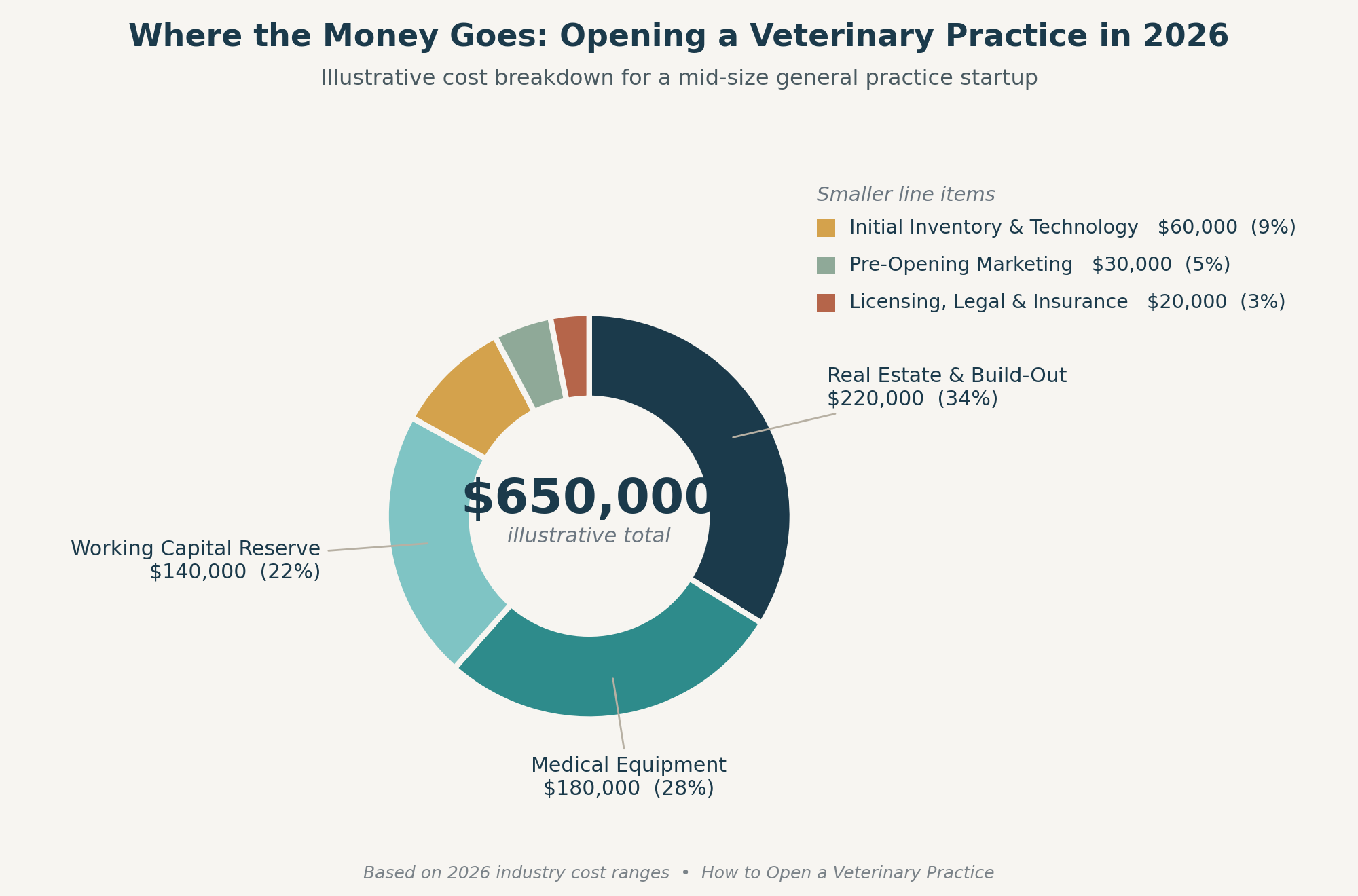
- Real estate and build-out is usually the single largest line item, often 40 to 50 percent of the total.
- Ground-up construction runs meaningfully higher than leasehold improvements, current hard-cost estimates from architecture firms put new construction at roughly $275 to $400 per square foot before soft costs.
- Working capital gets underestimated more than any other category. Most advisors recommend six to twelve months of reserves, not three.
- Specialty and multi-doctor hospitals can push well past $1 million, while a lean mobile practice can open for under $250,000.
The Real Range: $300,000 to $1,000,000 (and Why It’s So Wide)
For a general small-animal practice, most first-time owners land somewhere between $300,000 and $1,000,000 all-in. Specialty hospitals with advanced diagnostics and multiple doctors commonly exceed $1 million, sometimes well past $1.5 million. On the other end, mobile practices can open for as little as $50,000 to $250,000, since they trade real estate costs for vehicle fit-out instead.
The single biggest reason for that wide spread is real estate strategy. Leasing space and doing leasehold improvements is far cheaper than ground-up new construction. If you’re weighing that decision right now, it’s worth reading our breakdown of design-build vs. traditional construction before you commit to a path.
Real Estate and Build-Out
This is almost always the largest single category. If you’re leasing and renovating an existing commercial shell, leasehold improvements can run anywhere from $150,000 to $400,000 depending on how much of the plumbing, electrical, and layout has to change. If you’re building new, architecture industry estimates now put hard construction costs at roughly $275 to $400 per square foot nationally, and that’s before soft costs, permits, and contingency. For a 2,500 to 4,000 square foot clinic, that’s a meaningful jump over leasing. If you haven’t already, our piece on designing a practice within your budget walks through how to avoid the most common overruns in this category specifically.
Medical Equipment
Diagnostic imaging, surgical equipment, dental units, and lab analyzers typically run $100,000 to $500,000 depending on how much you want to run in-house versus refer out. A lean setup that delays digital radiography, ultrasound, or in-house lab equipment can save tens of thousands upfront, at the cost of relying more on outside labs early on.
Working Capital Reserve
This is the category people plan for the least and regret the most. Payroll alone for a launch team (lead veterinarian, technicians, an assistant, and front desk staff) commonly runs $30,000 or more per month before it climbs toward full capacity. Most financial advisors recommend six to twelve months of operating reserves, not the three months a lot of first-time owners budget for. Underestimating this is one of the most common reasons a well-built practice still runs into cash flow trouble in year one.
Initial Inventory, Technology, and Smaller Line Items
Practice management software, IT setup, furniture, initial drug and supply inventory, licensing, insurance, and your pre-opening marketing push round out the budget. Individually these are smaller numbers, but together they can still add up to 15 to 20 percent of your total. Marketing specifically is worth planning early. We cover how to spend that budget well in your first 90 days of marketing.
What Actually Moves Your Number Up or Down
- Lease vs. build: the single biggest lever. A well-chosen existing shell can cut your real estate line by hundreds of thousands compared to ground-up construction.
- Service scope: adding in-house advanced imaging, a dedicated dental suite, or boarding and grooming space all add real cost, but also add revenue potential. It’s a tradeoff, not a mistake either direction.
- Market: construction costs, lease rates, and even equipment shipping vary meaningfully by region.
- Team size at launch: a leaner opening team lowers your working capital need, but also caps how many appointments you can take on day one.
How Most Owners Finance This
Almost nobody pays for this out of pocket. Most first-time owners use a blend of an SBA or conventional term loan for the build-out and equipment, sometimes paired with a smaller line of credit to smooth out seasonal cash flow. If you haven’t settled on which loan type fits your situation, we’ve laid out the tradeoffs in Conventional Loans vs. SBA Loans, and if you’re still early in the financing conversation, How Do You Finance a Veterinary Practice? Start Here is the right place to begin.
Want a clearer picture of what your specific plan would actually cost? Our free ownership playbook walks through how to build a realistic budget before you go shopping for a loan. Download it here.
The Bottom Line
There’s no single “right” number for what it costs to open a veterinary practice, but there is a right process for finding your number. Start with your service scope, get real quotes on real estate before you fall in love with a location, and budget working capital like it’s non-negotiable, because it is. The owners who go over budget almost always underestimated the same two things: build-out costs and how long it takes to reach full caseload.
Frequently Asked Questions
How much does it cost to open a small veterinary practice?
A lean, small general practice can open on the lower end of the range, often $250,000 to $400,000, especially if you’re leasing a modest space and delaying some advanced equipment until cash flow supports it.
Is it cheaper to lease or build a veterinary practice?
Leasing and renovating an existing commercial space is almost always cheaper than ground-up construction. Current hard construction costs run roughly $275 to $400 per square foot nationally, well above typical leasehold improvement costs for a similar footprint.
How much working capital do I need to open a veterinary practice?
Most advisors recommend six to twelve months of operating expenses in reserve, not the three months many first-time owners initially plan for. This covers payroll and overhead while your caseload ramps up.
Ready to put real numbers behind your own plan?Schedule a free consultation and we’ll help you pressure-test your budget before you commit to anything.