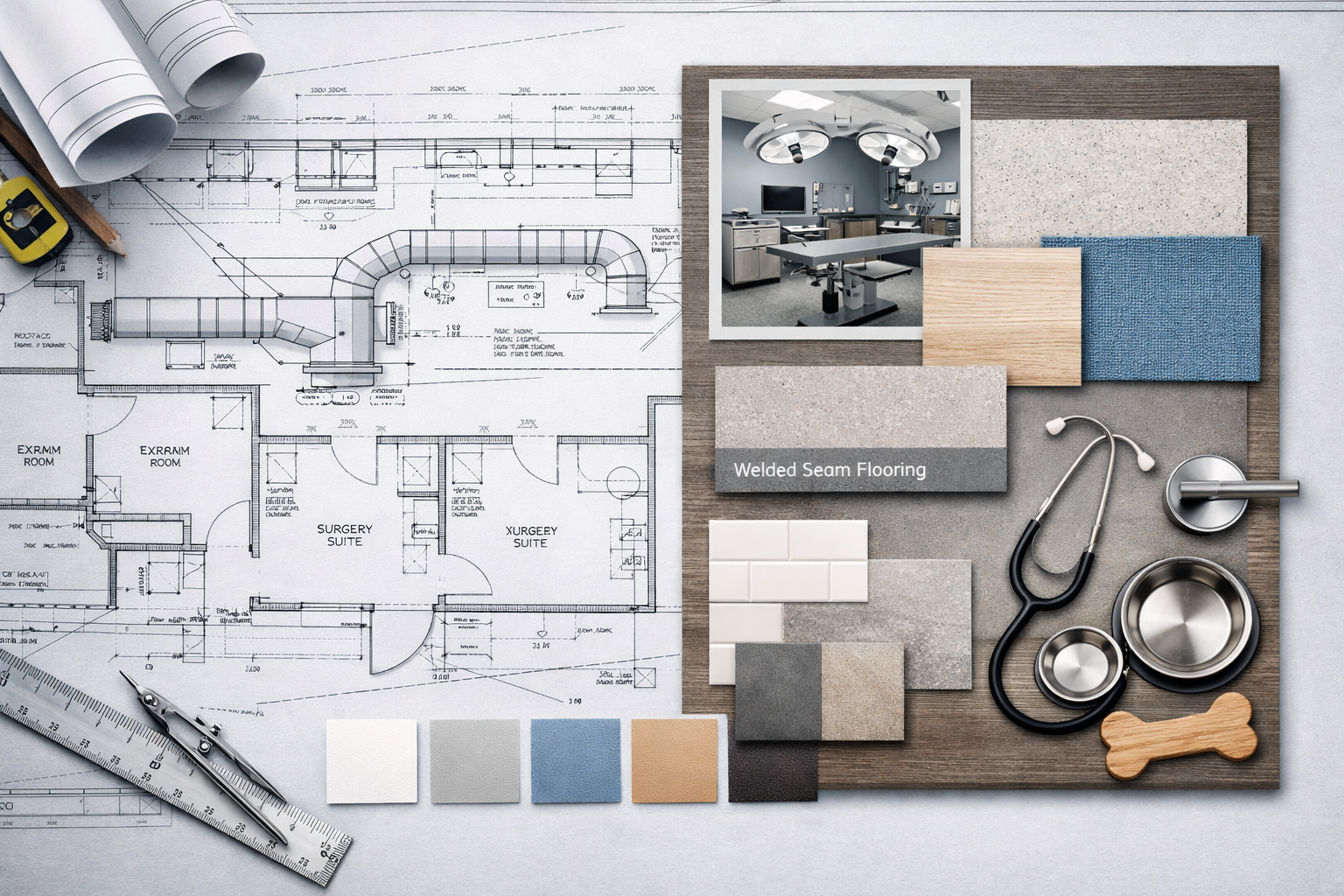
Designing a veterinary practice—whether it’s a ground-up build or a renovation—is one of the most exciting parts of ownership. But it’s also where many veterinarians unknowingly make decisions that lead to massive budget overruns.
Lately, we’ve seen a pattern: veterinarians investing in design, only to receive construction bids that are completely out of reach. And the worst part? They didn’t do anything wrong—they just weren’t protected during the design process.
If you’re planning to open, expand, or renovate a veterinary clinic, here’s what you need to know about designing within your budget—and how to avoid common (and expensive) pitfalls.
The Real Issue: Design Without Budget Alignment
In veterinary projects, the biggest cost problems usually come from a disconnect between:
- Design
- Equipment planning
- MEP systems (mechanical, electrical, plumbing)
- Construction costs
When these aren’t aligned, your project may look great on paper—but be impossible to build within your budget.
Here are two of the most common scenarios we see:
Scenario 1: Interior Design Without Veterinary Coordination
Some veterinarians start with an interior designer to create a welcoming, branded space. And while the design may look beautiful, it often lacks:
- Medical equipment integration (exam tables, wet tables, X-ray, dental)
- Proper plumbing for treatment and surgery
- Electrical loads for equipment
- HVAC considerations for odor control, air changes, and zoning
- Code-compliant layouts for medical use
When contractors go to price these projects, they’re left filling in major gaps.
That leads to:
- Inflated bids due to unknowns
- Missed scope that turns into change orders
- Expensive redesigns mid-project
The result: A clinic that was assumed to be affordable suddenly exceeds budget—before construction even begins.
Scenario 2: Architecture Without Budget Discipline
On the flip side, some veterinarians hire an architect who fully designs the space—but without grounding decisions in budget reality.
In veterinary clinics, this often shows up as:
- Expensive lighting packages
- High-end finishes applied throughout the entire clinic
- Excessive lighting beyond what’s required for medical functionality
- Relocating major systems like HVAC units, plumbing mains, or electrical panels
- Over engineering surgery suites without understanding actual workflow
While these choices may improve aesthetics or flexibility, they can significantly increase construction costs—often without improving day-to-day operations.
The result: A fully designed veterinary hospital that is financially unrealistic to build.
Why Veterinary Projects Are Especially Vulnerable
Veterinary clinics are more complex than typical commercial spaces.
They require:
- Specialized equipment
- Higher plumbing demands (wet tables, kennels, lab areas)
- Specific HVAC requirements (odor control, infection control, ventilation)
- Durable, cleanable materials
- Efficient workflows for staff and patients
Because of this complexity, even small design decisions can have major cost impacts if not carefully coordinated.
How to Design a Veterinary Practice Within Your Budget
Designing within budget doesn’t mean sacrificing quality—it means making smart, intentional decisions from the start.
1. Start With a Clear, Realistic Budget
Before design begins, define:
- Total project budget
- Construction budget
- Equipment budget
- Soft costs (design, permits, fees)
Your design team should treat this as a hard parameter, not a suggestion.
2. Plan Around Your Equipment First
In veterinary design, equipment drives the space.
Before finalizing layouts, you should know:
- What equipment you’re including
- Where it will be located
- What utilities it requires
Designing without this leads to costly rework later—especially when plumbing, electrical, or structural changes are needed.
3. Respect Existing Conditions
One of the fastest ways to blow your budget is relocating major systems like:
- HVAC units and ductwork
- Plumbing lines
- Electrical panels
Instead, ask:
- Can we design around this?
- Is relocation necessary for function—or just preference?
Working with the building—not against it—can save tens of thousands of dollars.
4. Be Strategic With Materials
Veterinary clinics need durable, cleanable finishes—but that doesn’t mean everything has to be top-tier.
A smarter approach:
- Invest in high-visibility areas (reception, exam rooms)
- Use cost-effective, durable materials in back-of-house spaces (treatment, kennels)
- Review material alternatives before locking them in
5. Avoid Over-designing Clinical Spaces
In veterinary medicine, function always comes first.
Common mistakes include:
- Specifying premium, surgical-grade welded flooring throughout the entire clinic
- Excessive exam rooms without patient volume to support them
- Overly complex lighting plans
- Designing for “ideal” workflows without budget consideration
Every extra square foot and system adds cost—so every decision should serve a purpose.
6. Build in Budget Checkpoints
At key stages of design, you should receive:
- Updated construction cost estimates
- Clear breakdowns of cost drivers
- Value engineering options if needed
If you’re only seeing costs after bidding, it’s already too late.
How Veterinarians Can Protect Themselves
Most veterinarians aren’t trained in construction or design—and you shouldn’t have to be. But you do need to know how to advocate for yourself.
Ask Better Questions
- “How does this layout impact my construction cost?”
- “What are the most expensive elements in this design?”
- “What can we adjust to stay within budget?”
- “Are we designing around my equipment and workflow?”
- “Will you value engineer so I can still achieve my desired outcome?”
Demand Coordination
Your project should not be designed in silos.
You need alignment between:
- Design
- Engineering
- Equipment planning
- Construction
If these aren’t working together, you’re at risk.
Don’t Assume More Expensive = Better
A higher price tag doesn’t always mean a better veterinary clinic.
The best clinics are:
- Efficient
- Functional
- Durable
- Financially sustainable
The Bottom Line
A successful veterinary practice design isn’t just about how it looks—it’s about whether it works operationally and financially.
Because at the end of the day:
A beautifully designed clinic that you can’t afford to build (or that puts you in financial strain) is not a successful project.
Designing within your budget means:
- Making informed decisions
- Coordinating every discipline
- Prioritizing function over excess
- Protecting yourself throughout the process
If you get that right, you won’t just build a clinic—you’ll build a practice that’s set up for long-term success.