Relocating a veterinary practice can be one of the most exciting — and overwhelming — decisions a practice owner makes. Whether you’re outgrowing your current space, seeking better visibility, or planning for expansion, relocation involves far more than just signing a new lease.
Between real estate, zoning, construction, equipment, and business operations, the process can quickly become complex without a clear plan.
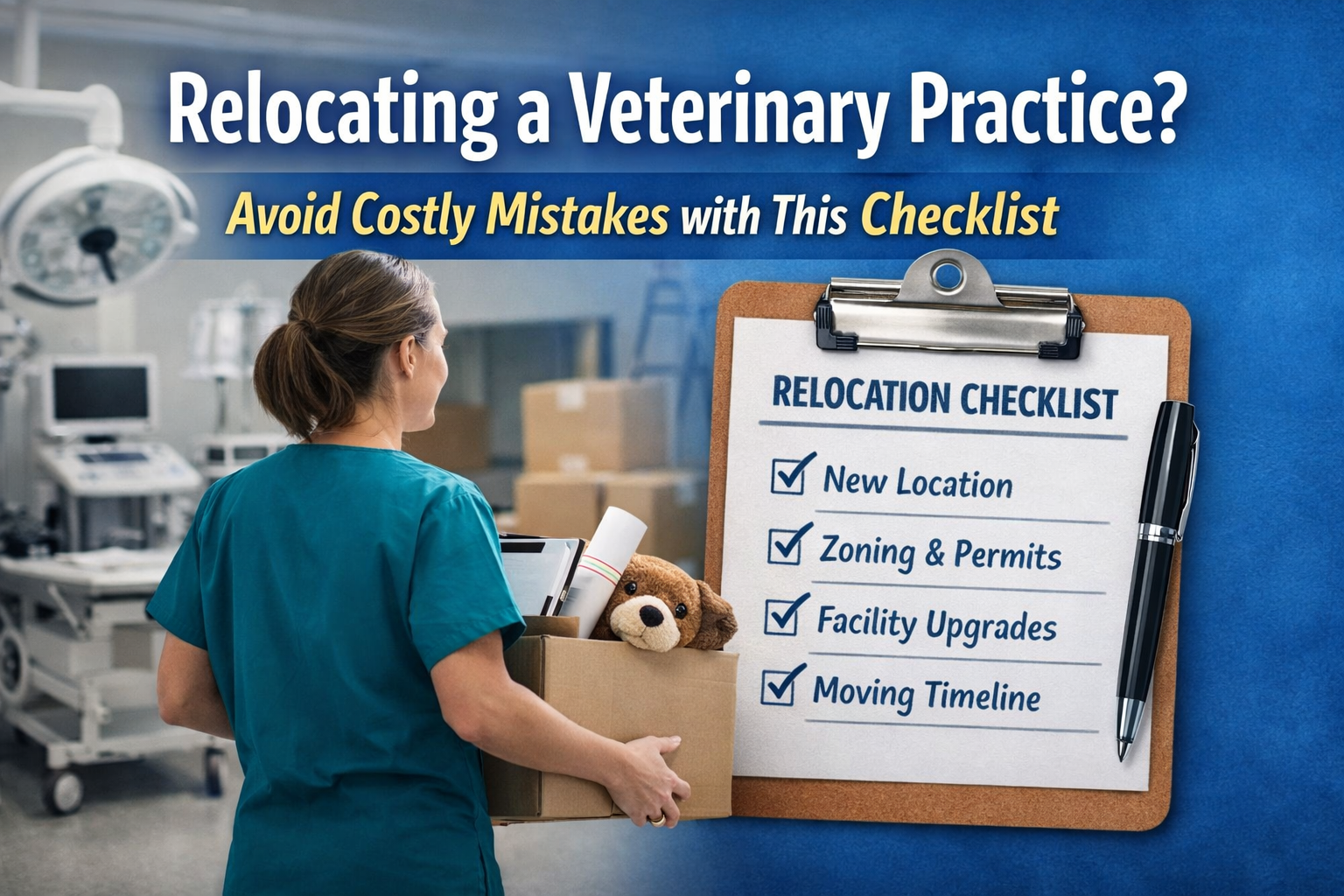
To help simplify things, we’ve put together a basic relocation checklist that outlines the key steps every veterinary practice owner should consider before making the move.
Why Veterinary Practice Relocation Requires Special Planning
Unlike traditional office spaces, veterinary practices require highly specialized infrastructure including:
- Medical gas
- Specialized plumbing
- Imaging and diagnostic equipment
- Surgery and treatment areas
- Animal housing and isolation
- Zoning approvals for veterinary use
Because of these requirements, not every commercial space will work for a veterinary practice, and many relocation decisions must be evaluated early in the process.
Veterinary Practice Relocation Checklist
1. Clarify Your Goals for Relocation
Start by identifying why you are relocating. Your goals will influence every decision moving forward.
Common reasons include:
- Expanding exam rooms or treatment space
- Adding new services (surgery, boarding, imaging, etc.)
- Improving location visibility and accessibility
- Purchasing a building instead of leasing
- Updating an outdated facility
Having clear goals helps determine the size, layout, and location requirements for your new space.
2. Determine Your Space Requirements
Before searching for real estate, define how much space your practice actually needs.
Consider:
- Number of exam rooms
- Treatment and surgery areas
- Kennels or boarding areas
- Imaging and laboratory space
- Staff offices and break rooms
- Storage and pharmacy space
Many practices relocating today fall in the 4,000–7,000 square foot range, depending on services offered.
3. Verify Zoning for Veterinary Use
Zoning is one of the most common obstacles veterinary practices encounter when relocating.
Before pursuing a property, confirm that:
- Veterinary services are permitted within the zoning classification
- There are no restrictions related to noise, outdoor runs, or animal boarding
- Required parking ratios can be met
Skipping this step can lead to costly delays or prevent the practice from operating in the space altogether.
4. Evaluate the Building for Veterinary Infrastructure
Not every building can easily support veterinary construction.
Important factors to review include:
- Plumbing capacity
- Electrical service
- Ceiling heights
- Structural capacity for imaging equipment
- Ventilation systems
- Exterior access for waste disposal and deliveries
A feasibility review with a designer or architect familiar with veterinary facilities can help identify potential issues early.
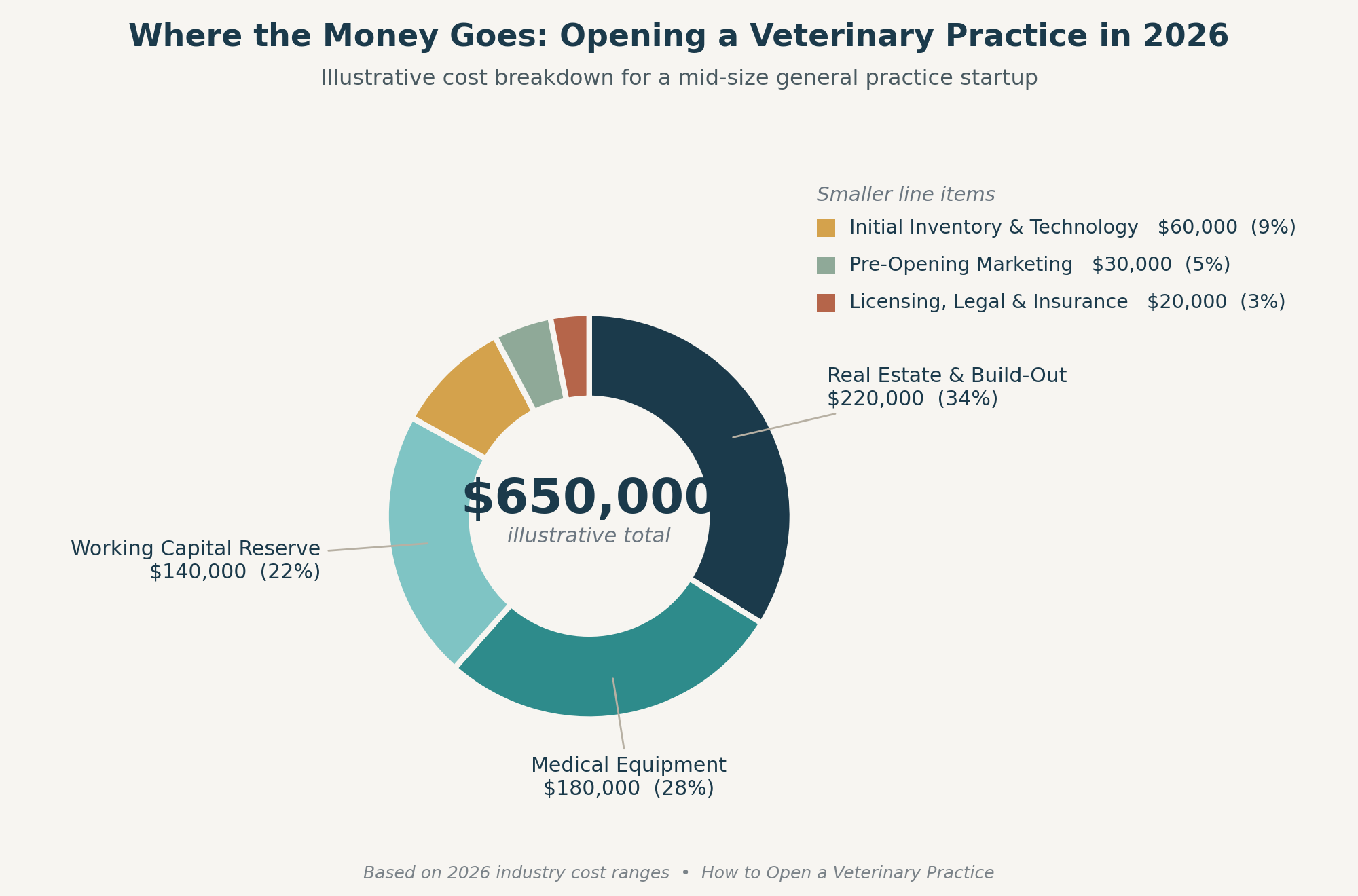
5. Understand Construction and Build-Out Costs
Veterinary facilities require specialized construction compared to standard retail or office build-outs.
Costs can vary depending on:
- Whether the project is a renovation or ground-up construction
- The complexity of the layout
- Medical equipment requirements
- Local labor and material costs
Planning a realistic construction budget early helps avoid surprises later.
6. Coordinate Equipment and Technology Planning
Relocation is often the ideal time to upgrade equipment or expand services.
Common considerations include:
- Imaging equipment (X-ray, ultrasound, CT)
- Dental stations
- Surgery equipment
- Laboratory systems
- Practice management software and IT infrastructure
Early coordination helps ensure the building design supports these systems.
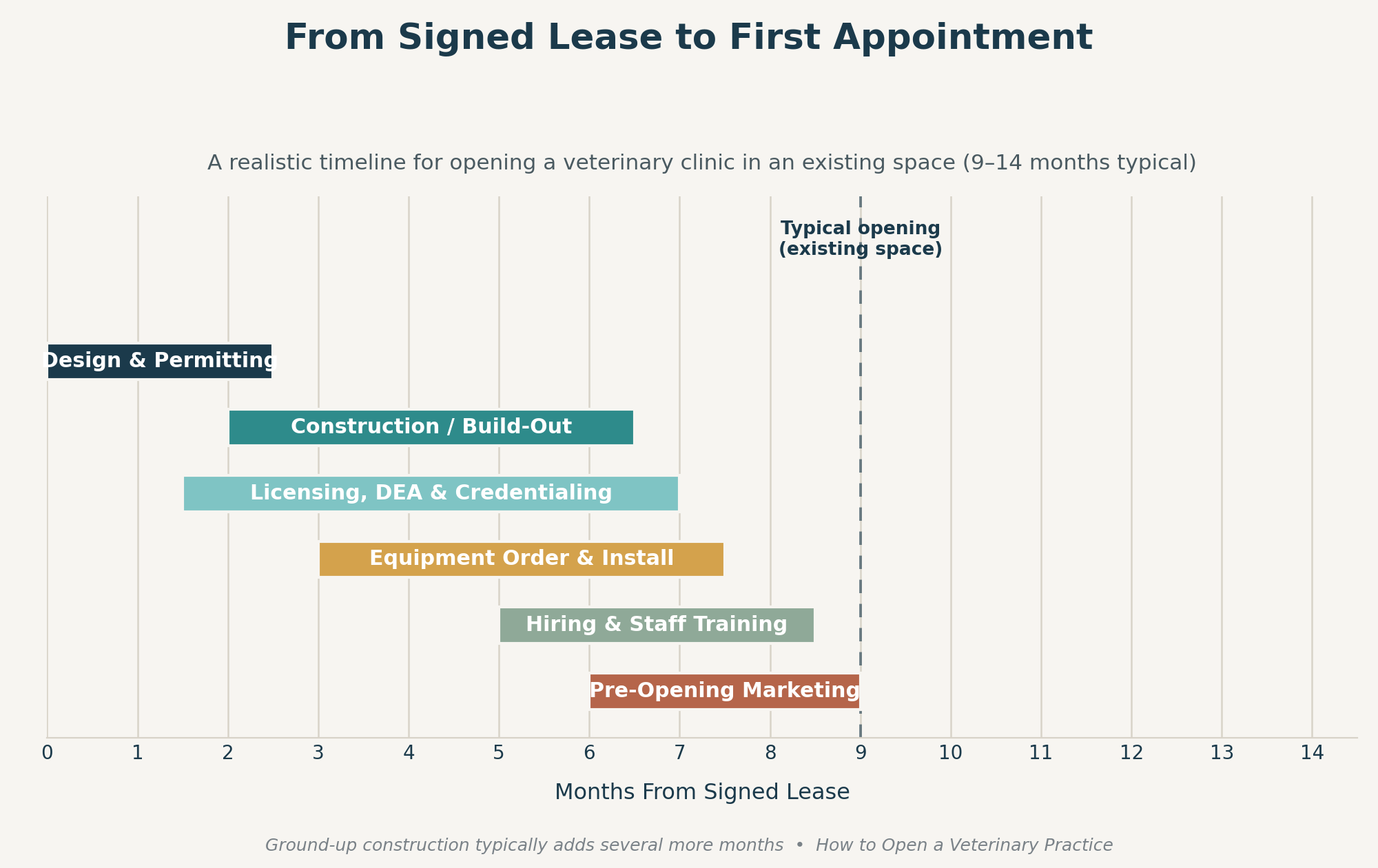
7. Develop a Realistic Project Timeline
Veterinary practice relocations typically take 9–18 months from planning to opening, depending on project complexity.
Major phases usually include:
- Real estate search
- Feasibility and due diligence
- Design and permitting
- Construction
- Equipment installation
- Move-in and opening preparation
Planning ahead helps minimize disruption to your practice operations.
A Final Tip: Start Planning Earlier Than You Think
One of the biggest mistakes veterinary practices make when relocating is starting the process too late. Commercial real estate, permitting, and construction timelines are often longer than expected.
Beginning the planning process early allows you to evaluate options, negotiate favorable lease terms, and design a space that truly supports your long-term goals.
Thinking About Relocating Your Practice?
Relocating a veterinary practice involves dozens of moving parts — from real estate and zoning to design, construction, and equipment coordination.
With the right planning and guidance, however, the process can be a strategic opportunity to build a facility that supports your team, your clients, and the future growth of your practice.