The Rise of Independent Veterinary Practices: How to Open Your Own Clinic in 2026
A Shift Is Happening in Veterinary Medicine
Recently, a growing number of veterinarians across the United States have searched one question:
“How do I open my own veterinary practice?”
That’s not random—it’s a signal.
After years of rapid consolidation and corporate expansion, we’re seeing a renewed interest in independent veterinary practice ownership. And in 2026, that shift is turning into real action.
If you’re currently working in a corporate setting and wondering what it would take to build something of your own, you’re not alone—and more importantly, it’s more achievable than ever before.
This guide breaks down:
- Your options for opening a veterinary practice
- What it actually costs
- How to transition from employee to owner
- And how to avoid costly mistakes along the way
Why Independent Veterinary Practices Are Making a Comeback
Over the past decade, corporate veterinary medicine has reshaped the industry—bringing capital, systems, and scalability.
But for many veterinarians, it has also introduced:
- Less autonomy in clinical decision-making
- Increased production pressure
- Reduced control over workplace culture
As a result, more DVMs are re-evaluating ownership—not just as a long-term goal, but as a strategic career move.
What’s different now?
Today’s veterinarians have access to:
- Veterinary-specific lenders
- Experienced project managers
- Specialized design and construction teams
- More transparent startup data than ever before
Opening a veterinary clinic is no longer reserved for a small percentage of the profession—it’s becoming a realistic path for many.
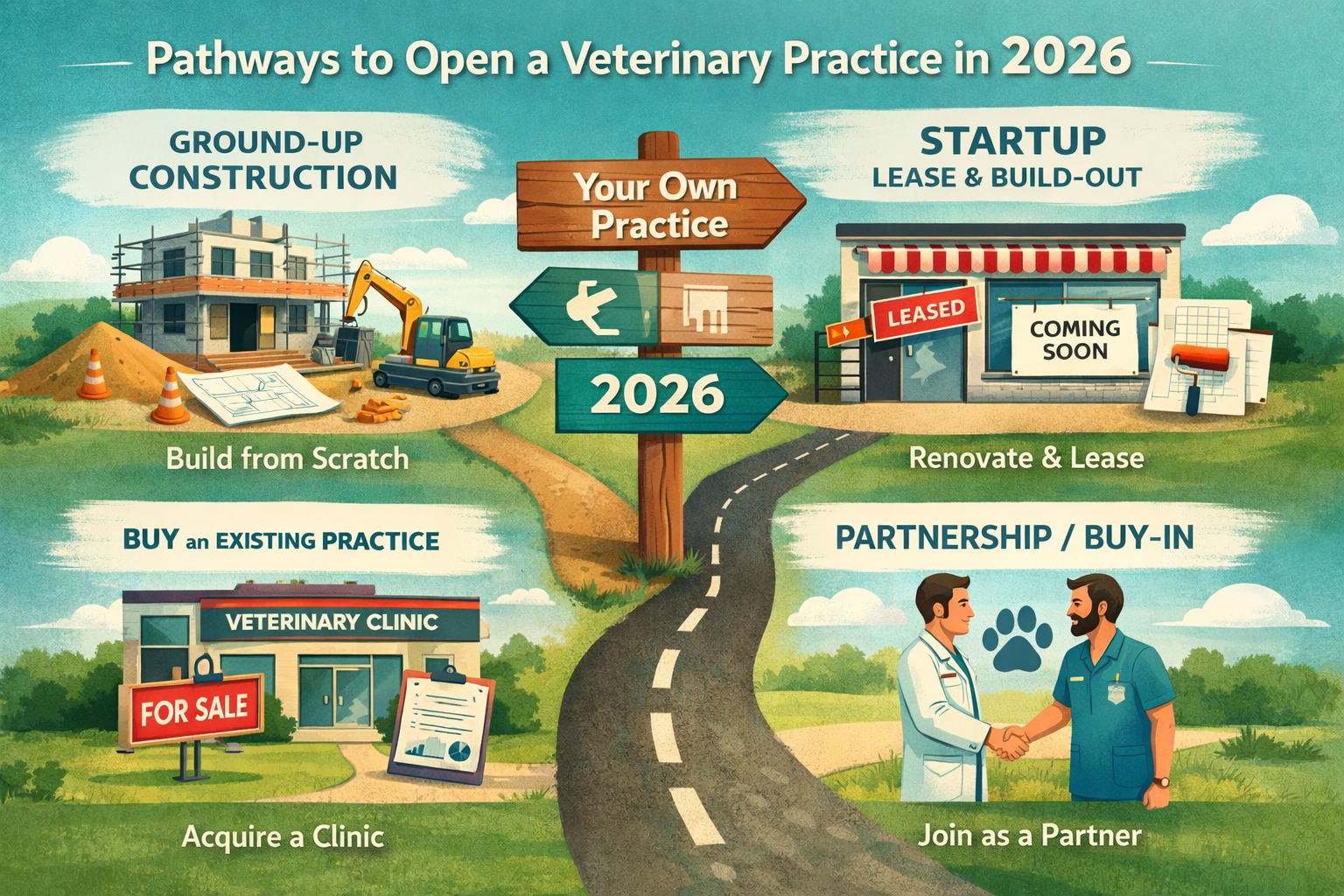
Your 4 Options for Opening a Veterinary Practice in 2026
There’s no one-size-fits-all approach to ownership. The right path depends on your goals, timeline, and risk tolerance.
1. Ground-Up Construction
Building a veterinary clinic from the ground up offers complete control over your space, workflow, and long-term vision.
Best for:
- High-growth areas
- Long-term ownership plans
- Fully customized design
Pros:
- Built specifically for veterinary workflows
- Brand-new systems and equipment
- Strong long-term asset value
Cons:
- Higher upfront cost
- Higher risk of hidden costs
- Longer timeline (typically 18-24+ months)
2. Startup (Lease/Purchase + Build-Out)
Leasing or purchasing a space and converting it into a veterinary clinic is one of the most common entry points into ownership.
Best for:
- Faster launch
- More controlled upfront investment
Pros:
- Lower cost and risk than ground-up
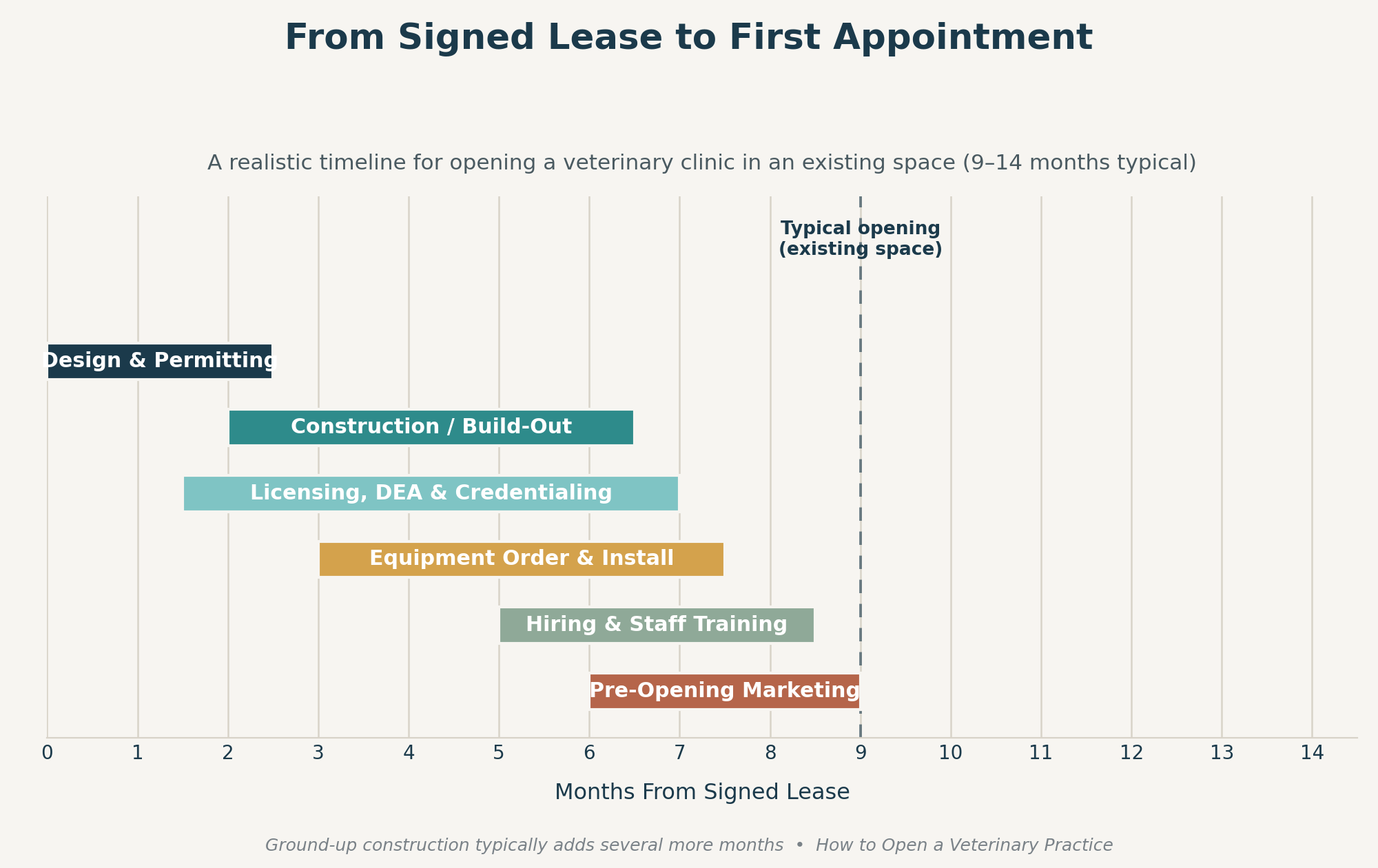
- Faster timeline (often 9-12 months)
Cons:
- Design limitations based on the existing space
- Landlord approvals and restrictions for lease option
3. Acquisition (Buying an Existing Practice)
Purchasing an existing veterinary practice allows you to step into an established operation.
Pros:
- Immediate revenue and cash flow if the patient flow is consistent
- Existing client base and team
- Proven location
Cons:
- Outdated layout or equipment
- Limited flexibility in design
- Potential operational inefficiencies
4. Partnership or Buy-In
A gradual transition into ownership through a partnership or buy-in can reduce risk and provide mentorship along the way.
Best for:
- Wary first-time owners
- Those seeking a phased transition
Breaking Away from Corporate Veterinary Medicine
Making the leap from corporate practice to ownership is as much a mindset shift as it is a financial decision.
Common concerns include:
- Student loan debt
- Lack of business experience
- Fear of financial risk
But here’s the reality:
Most successful practice owners didn’t start with business expertise—they built a team that filled those gaps.
That team often includes:
- Veterinary-focused lenders
- Project managers to guide the process
- Accountants and legal advisors
- Design and construction professionals
The biggest risk isn’t leaving corporate practice—it’s trying to navigate ownership without the right support.
Bonus Fact: Veterinarians have the lowest default rate on their practice loans.
What It Actually Costs to Open a Veterinary Practice in 2026
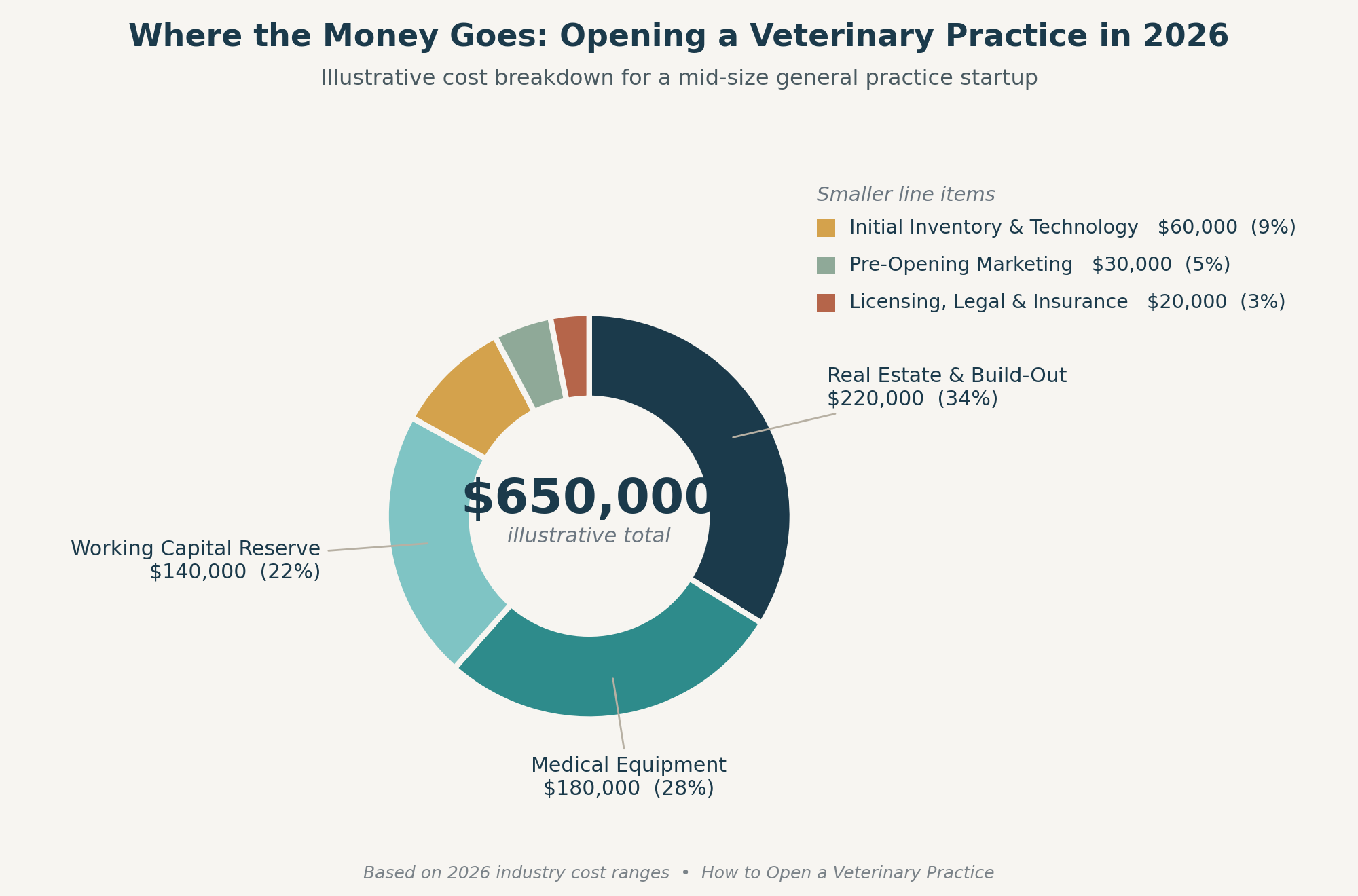
Costs can vary significantly based on location, size, and scope, but here are general ranges:
- Startup (Lease/purchase + Build-Out): $550,000 – $1,200,000+
- Ground-Up Construction: $900,000 – $2M+
- Acquisition: Typically 60–80% of annual revenue
Key cost drivers include:
- Construction and build-out
- Equipment and technology
- Real estate or lease terms
- Permits, compliance, and professional fees
Understanding these numbers early is critical to making informed decisions and avoiding budget overruns. Costs can also be inflated by missteps and pitfalls, so understanding the process and carefully selecting your practice development team is vital to maintaining your budget.
How to Open a Veterinary Practice
While every project is unique, most follow a similar path:
- Define your vision, services, and goals
- Find a location and create a business plan
- Secure financing through a veterinary specific lender
- Design your clinic for efficiency and growth
- Build and equip your space
- Hire and train your team
- Launch and market your practice
This is not a step-by-step process, its phased. Key milestones and tasks often overlap on the timeline—and missteps early on can have long-term consequences, which is why planning is everything.
Common Mistakes to Avoid
Opening a veterinary practice is a major investment. Avoiding these common pitfalls can save you time, money, and stress:
- Designing beyond your budget
- Choosing a poor location
- Underestimating timelines
- Delaying key decisions
- Trying to manage everything without expert guidance
One of the most costly mistakes?
Not aligning your budget, design, and construction strategy from the start.
The Opportunity in 2026
The revival of independent veterinary practices isn’t just a passing trend—it’s a shift toward intentional ownership, autonomy, and long-term value creation.
With the right strategy, team, and planning, opening a veterinary practice in 2026 is not only possible—it’s a smart, strategic move for many veterinarians.
If you’ve been thinking about it, you’re not early—and you’re not late.
You’re right on time.
Thinking about opening your own veterinary practice?
Find out if you’re ready with our Practice Ownership Quiz!