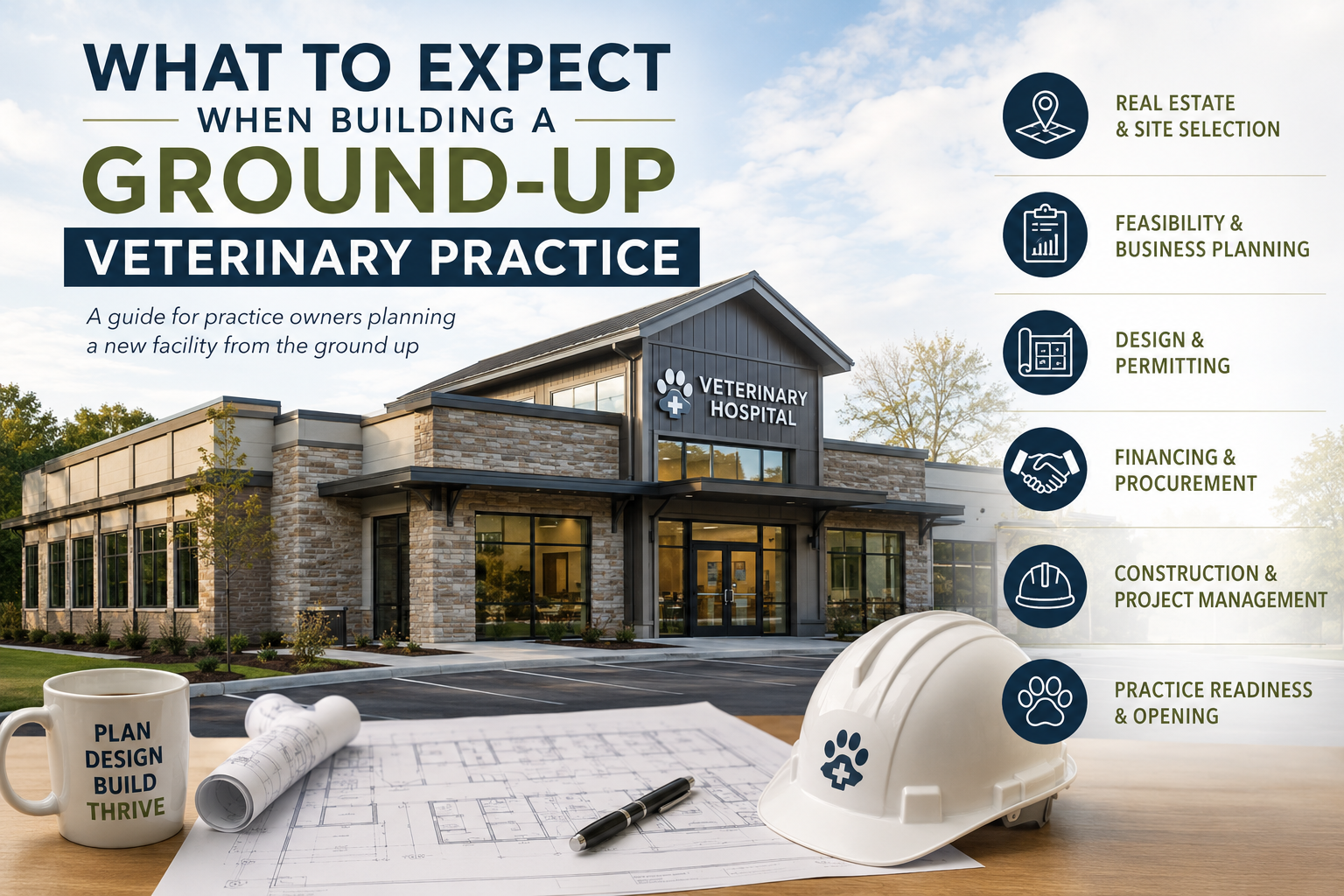
For many veterinary practice owners, there comes a point when the current facility can no longer support the vision for the future. Whether it’s limited exam rooms, insufficient treatment space, inadequate parking, or the desire to own real estate rather than lease, a ground-up veterinary hospital can provide the opportunity to create a facility specifically designed around the needs of the practice.
While building a new veterinary hospital offers tremendous benefits, many owners underestimate the complexity of the process. Unlike a traditional renovation or tenant improvement project, a ground-up development involves real estate evaluation, financing, site development, design, engineering, permitting, construction, equipment planning, staffing, and operational preparation—all occurring across multiple phases and often over several years.
Understanding what to expect before embarking on a ground-up project can help veterinary owners make informed decisions, avoid common pitfalls, and establish realistic expectations for the journey ahead.
Phase 1: Real Estate Selection and Site Evaluation
Every successful ground-up veterinary hospital begins with selecting the right property. While many owners focus primarily on location and purchase price, the reality is that the site itself can significantly influence project costs, development timelines, and overall feasibility.
Not all properties are created equal. Depending on your goals, budget, and desired timeline, you may encounter several different types of development opportunities.
Common Property Types
Raw Land
Raw land typically has no site improvements or utility connections. While it may offer a lower acquisition cost, it often requires substantial investment in infrastructure and site development before construction can begin.
Improved Land
Improved parcels may already have utility access, road frontage, and site infrastructure in place, reducing certain development requirements.
Pad Sites
Pad-ready sites are often located within retail centers or commercial developments and may already have utility connections available. These sites can sometimes shorten development timelines and reduce site preparation requirements.
Redevelopment Opportunities
Some veterinary owners may consider properties containing older structures, abandoned buildings, or even condemned facilities. While these opportunities can offer attractive locations, they often introduce additional due diligence requirements and potential demolition costs.
Evaluating the Site
Finding a desirable location is only the first step. A comprehensive site evaluation should examine several critical factors.
Demographics and Market Conditions
The surrounding market should support both current operations and future growth. Population trends, household income, pet ownership rates, competition, and referral patterns all play a role in determining long-term viability.
Accessibility and Visibility
The best veterinary hospitals are often easy to find and convenient to access. Traffic counts, ingress and egress, parking availability, and roadway visibility can significantly impact patient experience and future growth.
Zoning and Permitted Use
Not every parcel is automatically approved for veterinary use. Some jurisdictions require special use permits, conditional approvals, or zoning modifications before development can proceed.
Understanding Hidden Conditions
One of the biggest surprises for first-time developers is discovering site conditions that were not immediately apparent during the purchase process.
These hidden conditions can affect both cost and timeline.
Soil Conditions
Geotechnical investigations may reveal unsuitable soils, groundwater concerns, rock formations, or other subsurface conditions that impact foundation design and site development.
Utility Availability
Water, sewer, electric, gas, and telecommunications services may not be as readily available as they initially appear. Utility extensions can become a significant component of site development.
Easements and Restrictions
Utility easements, drainage easements, access easements, and other encumbrances may limit where buildings, parking lots, or other improvements can be constructed.
Setbacks and Development Restrictions
Local ordinances frequently dictate minimum distances between structures and property lines, maximum building heights, parking requirements, and other development limitations.
Floor Area Ratio (FAR)
Many buyers focus on acreage without fully understanding how much of the property can actually be developed. FAR regulations may significantly limit building size despite a property’s overall acreage.
Topography and Drainage
Steep slopes, retaining wall requirements, stormwater management needs, and drainage challenges can all affect development costs and constructability.
Environmental Considerations
Floodplains, wetlands, protected environmental areas, and other regulatory factors may impact development plans or approval timelines.
One of the most common mistakes veterinary owners make is purchasing land before fully understanding these site constraints. Thorough due diligence before acquisition can prevent costly surprises later in the project.
Phase 2: Feasibility, Business Planning, and Financial Evaluation
Once a potential site has been identified, the next step is determining whether the project is truly feasible from both an operational and financial standpoint.
Many owners become emotionally attached to a property before evaluating whether the site aligns with their goals, timeline, and budget. A comprehensive feasibility analysis helps ensure that major decisions are made based on facts rather than assumptions.
Feasibility Analysis
A thorough feasibility evaluation typically examines:
- Site development requirements
- Municipal approval considerations
- Utility availability
- Project timeline expectations
- Development risks
- Long-term expansion opportunities
- Alignment with business objectives
The goal is not simply to determine whether a project can be built, but whether it should be built.
Business Planning
A new facility should support the future vision of the practice.
Owners should consider:
- Anticipated patient growth
- Service line expansion
- Staffing projections
- Equipment requirements
- Future space needs
- Long-term operational goals
Designing only for today’s needs can result in capacity limitations much sooner than expected.
Financing Considerations
Ground-up veterinary projects often require specialized financing structures that support both land acquisition and construction.
Common financing options may include:
- SBA financing
- Conventional commercial loans
- Construction loans
- Owner equity contributions
Financing discussions should begin early in the process, as lenders often require extensive documentation, financial analysis, business planning information, and project details before issuing approvals.
A common mistake at this stage is proceeding into design without first validating the overall feasibility and financing strategy for the project.
Phase 3: Design, Engineering, and Municipal Approvals
Once feasibility has been established, the project moves into design and engineering.
Many veterinary owners view this as the beginning of the project. In reality, this phase represents the transition from concept to implementation and often involves numerous consultants working simultaneously.
Architectural Design
The architectural team develops the overall building design while incorporating workflow considerations unique to veterinary medicine.
Planning often includes:
- Reception and waiting areas
- Exam rooms
- Treatment spaces
- Surgical suites
- Imaging rooms
- Boarding facilities
- Administrative offices
- Storage areas
Thoughtful planning during this phase can improve efficiency, patient flow, staff experience, and future scalability.
Civil Engineering
Civil engineers develop the site infrastructure required to support the facility.
This may include:
- Parking layouts
- Site grading
- Utility coordination
- Stormwater management
- Traffic circulation
- Accessibility compliance
Structural Engineering
Structural engineers design the building systems that support the facility while accounting for local building codes and site-specific conditions.
Mechanical, Electrical, and Plumbing Engineering
Veterinary hospitals often require specialized infrastructure to support medical equipment, imaging systems, surgical suites, laboratories, and boarding operations.
Mechanical, electrical, and plumbing systems must be carefully coordinated throughout the design process.
Municipal Reviews and Approvals
One of the least predictable aspects of ground-up development is the approval process.
Depending on the jurisdiction, projects may require review by:
- Planning departments
- Zoning boards
- Architectural review committees
- Utility authorities
- Building departments
- Environmental agencies
Approval timelines can vary significantly from one municipality to another.
Many owners underestimate how long this phase can take and assume approvals are largely administrative. In reality, some approvals involve discretionary reviews that can introduce additional revisions and delays.
Phase 4: Equipment Planning, Interior Coordination, and Operational Preparation
While design and permitting efforts continue, many operational decisions are taking place behind the scenes.
Veterinary Equipment Planning
Equipment planning should occur early enough to ensure the building is designed to accommodate both current and future operational needs.
Planning often includes:
- Digital imaging equipment
- Surgical equipment
- Treatment area requirements
- Laboratory equipment
- Boarding systems
- Specialty services
Cabinetry and Interior Planning
Custom millwork, treatment cabinetry, pharmacy storage, laboratory workstations, and other interior components should be coordinated with the design team well before construction.
Technology Infrastructure
Modern veterinary practices rely heavily on technology systems.
Planning may include:
- Practice management software
- Data infrastructure
- Telecommunications
- Security systems
- Wi-Fi coverage
- Audio and visual systems
This phase is frequently overlooked because much of the work occurs outside of construction, yet these decisions can have a significant impact on daily operations once the practice opens.
Phase 5: Bidding, Procurement, and Contractor Selection
Once the design and permitting process reaches the appropriate stage, construction pricing and contractor selection can begin.
The bidding process provides owners with an opportunity to evaluate contractors, review project scope, and compare construction approaches.
Contractor selection should consider more than cost alone.
Owners should evaluate:
- Relevant project experience
- Healthcare construction expertise
- Project team qualifications
- Communication processes
- Scheduling capabilities
- Quality control procedures
Selecting a contractor based solely on the lowest bid can create challenges later if scope gaps, coordination issues, or unforeseen costs emerge during construction.
Phase 6: Construction and Project Execution
Construction is often the most visible phase of the project, but it is only successful when supported by thorough planning during the earlier stages.
Site Development
Construction typically begins with site preparation activities such as:
- Clearing and grubbing
- Earthwork and grading
- Utility installation
- Stormwater infrastructure
- Foundation preparation
Building Construction
As the project progresses, crews complete:
- Foundations
- Structural systems
- Roofing
- Exterior finishes
- Building envelope components
Interior Construction
Interior work generally includes:
- Framing
- Mechanical systems
- Electrical systems
- Plumbing systems
- Drywall
- Flooring
- Millwork
- Equipment installation
Inspections and Quality Control
Throughout construction, numerous inspections occur to verify compliance with building codes and project requirements.
These inspections may involve building officials, utility providers, engineers, and other regulatory agencies.
Although construction may appear straightforward from the outside, active coordination remains essential to maintain schedule, manage changes, and keep stakeholders aligned.
Phase 7: Practice Readiness and Opening Preparation
As construction nears completion, focus shifts toward operational readiness.
The building may be almost finished, but the practice itself still needs to prepare for opening day.
Staffing and Recruitment
Many owners begin recruiting and onboarding staff well before occupancy.
This may include:
- Veterinarians
- Veterinary technicians
- Client service representatives
- Practice managers
- Support personnel
Operational Readiness
Additional preparations often include:
- Vendor onboarding
- Service agreements
- Inventory procurement
- Licensing requirements
- Training programs
- Technology implementation
Final Installation and Move-In
Furniture, equipment, technology systems, and operational supplies must be delivered, installed, tested, and commissioned prior to opening.
Launch Planning
Marketing, community outreach, referral communications, and grand opening activities often begin before the facility officially opens its doors.
Why Project Management Matters
A common misconception is that building a veterinary hospital is primarily a construction project.
In reality, it is a complex business development project involving numerous stakeholders, consultants, vendors, and regulatory agencies.
Throughout the process, owners may interact with:
- Real estate professionals
- Lenders
- Attorneys
- Architects
- Engineers
- Contractors
- Equipment vendors
- Technology providers
- Municipal officials
- Practice leadership teams
Without proper coordination, communication gaps can result in delays, redesigns, budget impacts, and missed opportunities.
Successful projects require more than construction management—they require ongoing coordination across every phase of development.
Common Ground-Up Development Mistakes
While every project is unique, several challenges occur repeatedly.
Common mistakes include:
- Purchasing land before completing due diligence
- Assuming utilities are readily available
- Underestimating approval timelines
- Designing before establishing a realistic budget
- Failing to plan for future growth
- Delaying financing discussions
- Waiting too long to address operational planning
- Selecting consultants without proper coordination
- Attempting to manage every aspect of the project internally
Avoiding these pitfalls begins with proper planning and a clear understanding of the development process.
Final Thoughts
Building a ground-up veterinary hospital can be one of the most rewarding investments a practice owner makes. A thoughtfully designed facility can improve workflow, enhance patient care, support staff efficiency, and position the practice for long-term growth.
However, successful projects are built long before construction begins. Real estate evaluation, feasibility analysis, business planning, financing, design coordination, permitting, and operational preparation all play critical roles in the outcome.
Understanding what to expect throughout each phase of development allows veterinary owners to make informed decisions, manage risks, and create a stronger foundation for the future of their practice.